
Why age seven is an important checkpoint
The American Association of Orthodontists recommends that children receive an orthodontic check-up by age seven. At this stage, a mix of baby and permanent teeth can give an orthodontist useful information about eruption, spacing, bite relationships and jaw development.
An early visit does not mean treatment should begin immediately. Many children are best served by observation while growth and tooth eruption continue.
What we evaluate
- How the upper and lower teeth meet.
- Crowding, spacing and the path of erupting permanent teeth.
- Crossbites, underbites, open bites or protruding front teeth.
- Jaw growth patterns and functional shifts.
- Oral habits that may affect developing teeth or jaws.

When early treatment may help
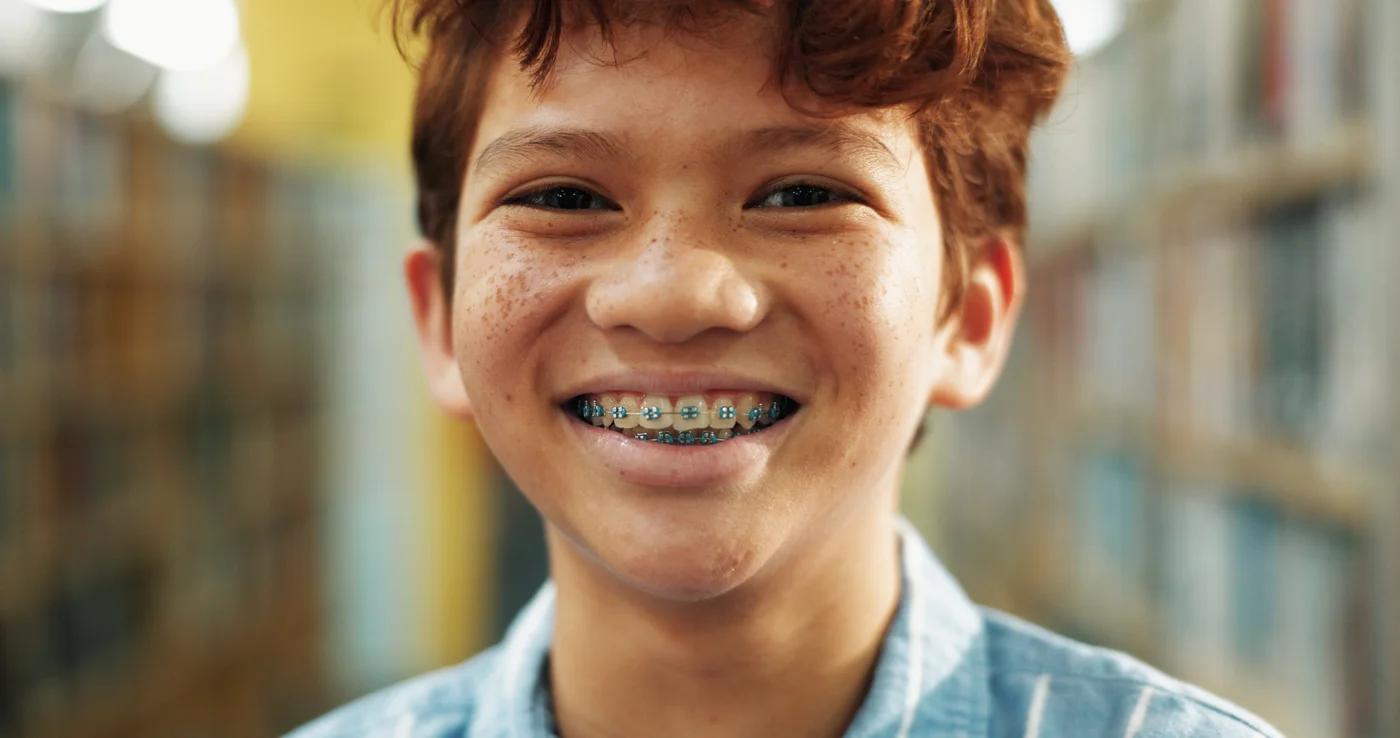
For selected children, well-timed treatment may guide development, address a crossbite, create space for erupting teeth or reduce the risk of trauma to very protrusive front teeth. The specific benefit and alternatives should be clear before treatment begins.
If no treatment is recommended, periodic observation can help the orthodontist choose a more favorable time later.
Source: American Association of Orthodontists.
Frequently asked questions
Does every seven-year-old need braces?
No. The age-seven recommendation is for an evaluation. Many children do not need immediate treatment.
What should I bring to the first visit?
Bring relevant dental or medical information and your insurance details if you would like benefits reviewed. Existing recent dental X-rays may be helpful when available.
What if my child is younger than seven?
If a dentist, physician or parent notices a significant bite, eruption, trauma or jaw-development concern, an earlier orthodontic evaluation may be appropriate.